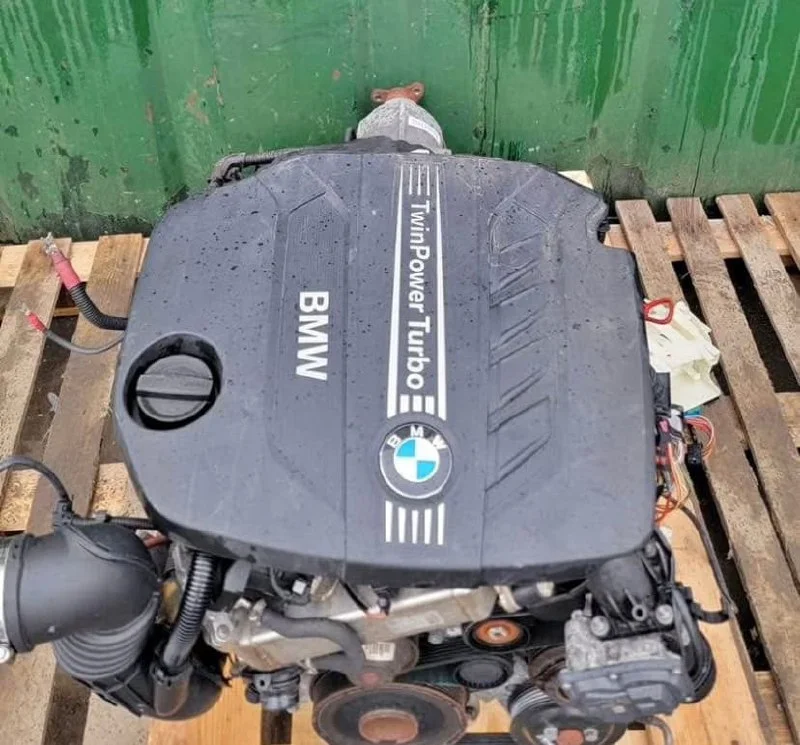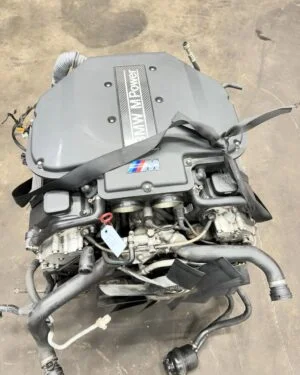
Strip-down and first diagnosis
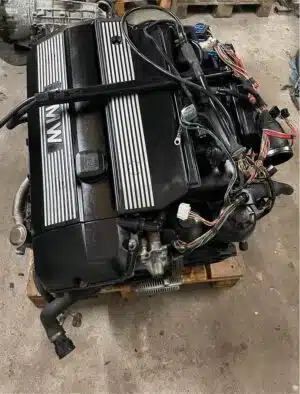
A full rebuild begins with the engine out of the car and stripped to the bare crankcase. Before anything is cleaned, a careful workshop records what it finds: the colour and condition of the oil, deposits under the valve cover, carbon on the piston crowns, and the wear pattern on every bearing shell. Those observations are evidence. Once the parts go into the wash tank, most of that evidence is gone.
The purpose of this stage is to establish why the engine failed or wore out. A spun rod bearing points to oil starvation, a blocked pickup, or a lubrication fault elsewhere. A cracked head or a failed head gasket points to overheating. Fuel wash on the bores of a diesel can point to an injector fault. If the cause is not found and corrected, a freshly rebuilt engine can fail in the same way.
Components are labelled and kept in order as they come out. Pistons, connecting rods, bearing caps, and valve-train parts that may be reused must go back into the positions they came from, because they have worn in against their mating surfaces. Mixing them up can turn reusable parts into scrap and add avoidable cost to the job.
Measuring every wear surface
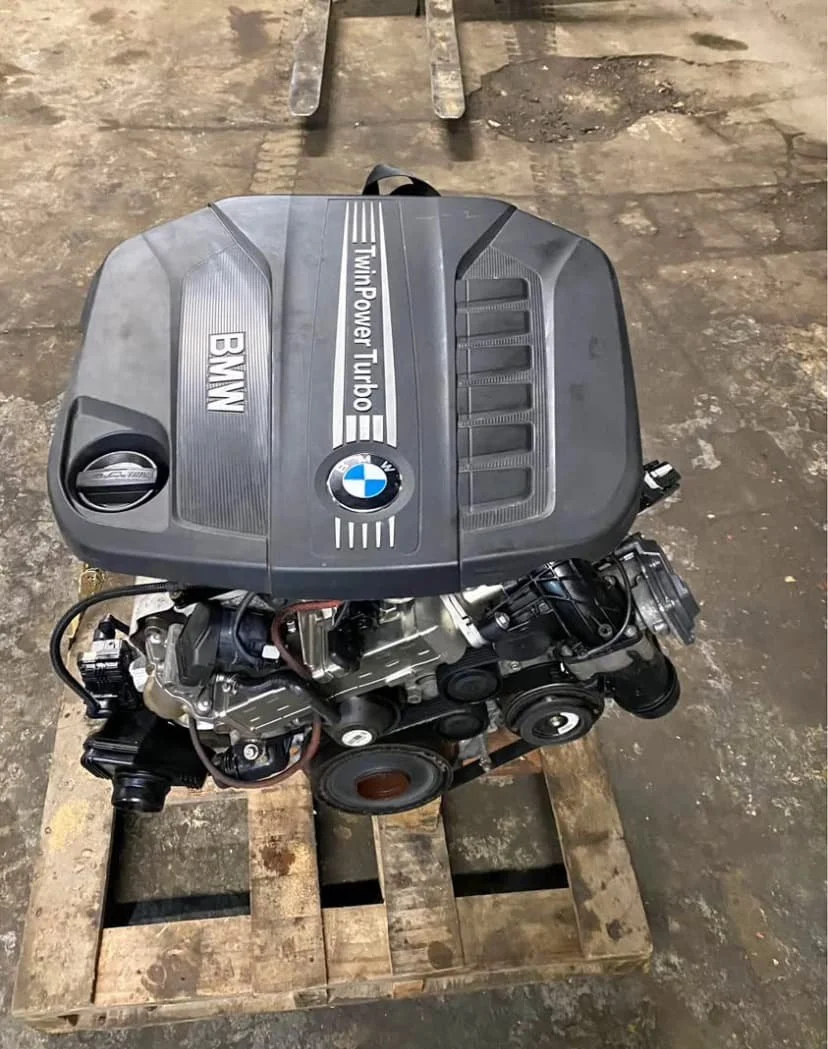
After cleaning, the engine is measured against the figures in BMW’s repair information for that engine code. Cylinder bores are checked with a bore gauge at several depths and in two directions to find taper and ovality. Crankshaft journals are measured with a micrometer. The cylinder head is checked for flatness with a straightedge and feeler gauges, and the valve guides are checked for clearance.
Crack testing follows. Cylinder heads can be pressure tested to find coolant leaks that are invisible to the eye, and diesel heads in particular are inspected closely between the valve seats. Steel crankshafts can be crack tested with magnetic particle inspection. A part with a crack is normally replaced rather than repaired, because a repair rarely matches the strength of the original part.
The measurement sheet decides the rest of the job. It shows which parts are within limits and can be reused, which surfaces need machining, and which parts must be replaced. Some BMW blocks have bore surfaces or coatings that cannot be bored oversize in the conventional way, so the measurements also show whether the block can be saved at all.
Machine shop work
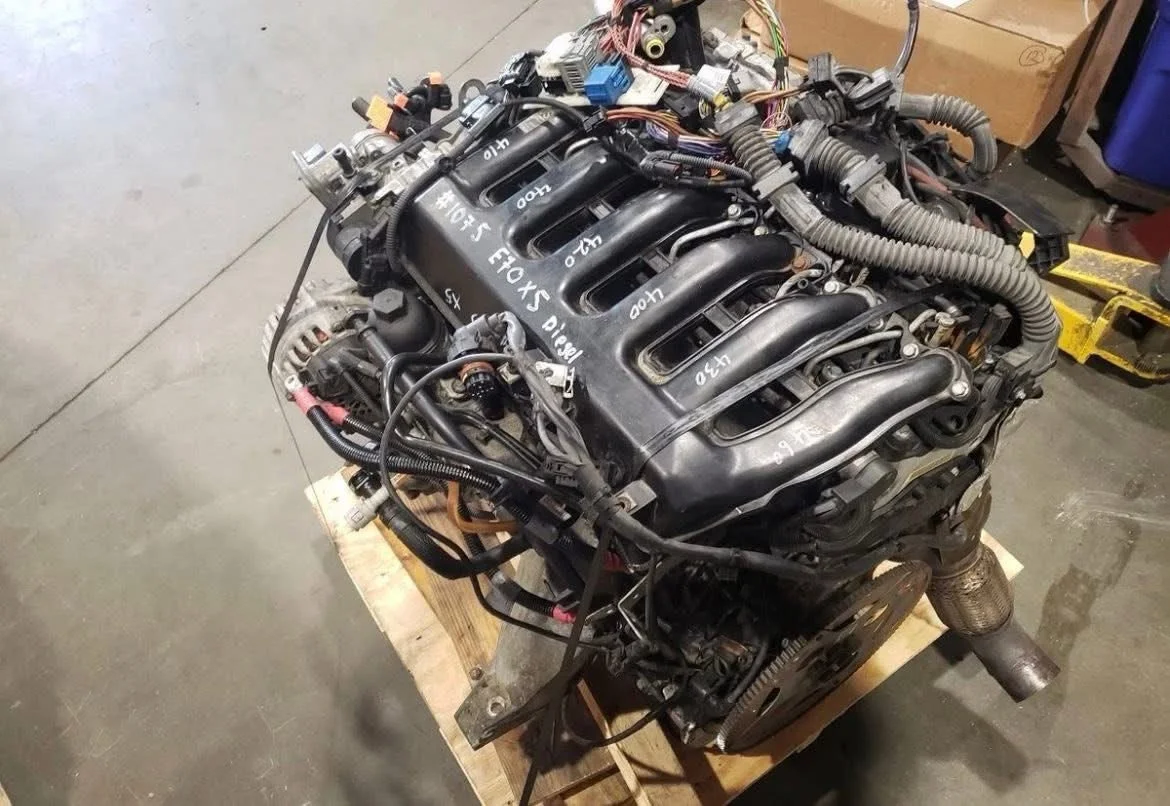
Machining restores geometry. The bores may be honed to give the new rings a correct surface to bed against, or bored oversize where the block design and parts supply allow it. The cylinder head is skimmed if it is out of flat, the valve seats are recut, and the main bearing bores are checked for alignment. Each of these jobs is explained in more detail in our separate guide to machine shop work.
Crankshafts are polished when the journals are within limits and only lightly marked. A crankshaft with deeper damage can be ground undersize, but only if matching undersize bearing shells are available for that engine. Where they are not, a replacement crankshaft is the only correct repair. The cost and availability of these parts often decide whether a rebuild is worthwhile at all.
Parts renewed in a full rebuild
In a full rebuild, the wear parts are renewed as a matter of course rather than on condition. That normally means main and connecting rod bearings, the thrust bearing, piston rings, a complete gasket and seal set, valve stem seals, and the timing chain together with its guides, its tensioner, and, where they show wear, its sprockets.
Fasteners deserve their own line on the parts list. Many BMW engines use cylinder head bolts and connecting rod bolts that are stretched during tightening and are single-use. Some engines also use aluminium bolts that must always be replaced. Reusing a stretched bolt saves very little and risks a head gasket failure or a connecting rod coming loose.
The oil pump, water pump, thermostat, and on diesels the injector seals and hold-down hardware are usually renewed or inspected closely at the same time. Turbochargers, injectors, and the high-pressure fuel pump are separate items. A rebuild quote should state clearly whether each of them is included, tested, or excluded.
Assembly and clearances
Assembly is where the measuring pays off. Bearing clearances are confirmed with a measuring method rather than assumed, piston ring end gaps are checked in the bore, and crankshaft end float is measured once the thrust bearing is fitted. Every critical fastener is tightened to the torque and angle procedure in the repair information, in the correct sequence.
Cleanliness matters as much as precision. Machining and honing leave abrasive residue in oil galleries, blind holes, and bolt threads. The block is washed and brushed through before assembly, and threads are cleaned so that torque readings are accurate. A single grain of honing grit carried into a bearing can undo the whole rebuild.
Valve timing on modern BMW engines is set with dedicated locking tools for the crankshaft and camshafts. The timing chain is fitted, the tensioner is installed, and the engine is turned by hand through several complete revolutions to confirm that the timing marks realign and that nothing makes contact where it should not.
First start and the build record
Before the first start the lubrication system is primed so that oil reaches the bearings and the chain tensioner before the engine fires. The cooling system is filled and bled, and on cars with an electric water pump that is done with the bleeding routine for that model. Our guide to running in a rebuilt BMW engine covers this stage step by step.
A good rebuilder hands over a written record: the measurements taken, the machining carried out, and a parts list with part numbers. That record is useful later when a fault has to be diagnosed, when the car is sold, and when a warranty question arises. A rebuild without a record is hard to tell apart from an engine that was simply resealed.
Rebuild or replacement unit
A rebuild makes sense when the block, crankshaft, and head are serviceable and the labour can be justified against the value of the car. When the block is cracked, a bore is badly scored, or the crankshaft and its bearing bores have been damaged by a spun bearing, a complete replacement engine is often the more practical route.
BMW Engine lists photographed engines with the engine code and a price on each product page. The listing states what work was done on that unit; if it does not say that bearings, rings, or the head were renewed, those parts were not renewed. Comparing a written rebuild quote with a listed unit of the correct code is the clearest way to decide.
Warranty
Eligible engines carry a warranty of up to 12 months after a correct installation by a workshop. The warranty covers eligible internal failure. It does not cover a mismatched fitment, a dry start, the wrong oil, or damage caused after the crate is opened.
Shipping
Crane crates from Hamburg is a flat 299,00 €. The engine is packed for freight and delivered to the address on the order. A forklift or an engine crane is required at delivery. The shipment is arranged to the destination the buyer provides.
FAQ
How long does a full BMW engine rebuild take?
It depends mainly on machine shop queues and the availability of parts for that engine code. Ask the workshop for a written estimate with a stop point after the strip-down, so the plan can change once the measurements are known.
Is a rebuilt engine better than a used engine?
Not automatically. A rebuild is only as good as its measurements, machining, and parts, and a well-documented used engine of the correct code can be the better choice. Compare the paperwork, not the label.
Does a full rebuild include the turbocharger and injectors?
Not by default. Turbochargers, injectors, and fuel pumps are separate items, and the quote should say whether each one is renewed, tested, or excluded.
Does full engine rebuild include door-to-door delivery?
Yes. Shipping is a flat 299,00 € to the address on the order, from the workshop in Hamburg.
How long is the warranty?
Up to 12 months on eligible internal failure after a correct installation. The warranty page has the full terms.
Are the photographs of the engine being sold?
Yes. Covers and pictures in these guides are workshop photographs of listed engines, not generated pictures.
Compare listed enginesFree VIN check